
Human Experience
The People We Become in the Presence of Others
Why we are funnier with some people, quieter with others, and not quite the same person anywhere.
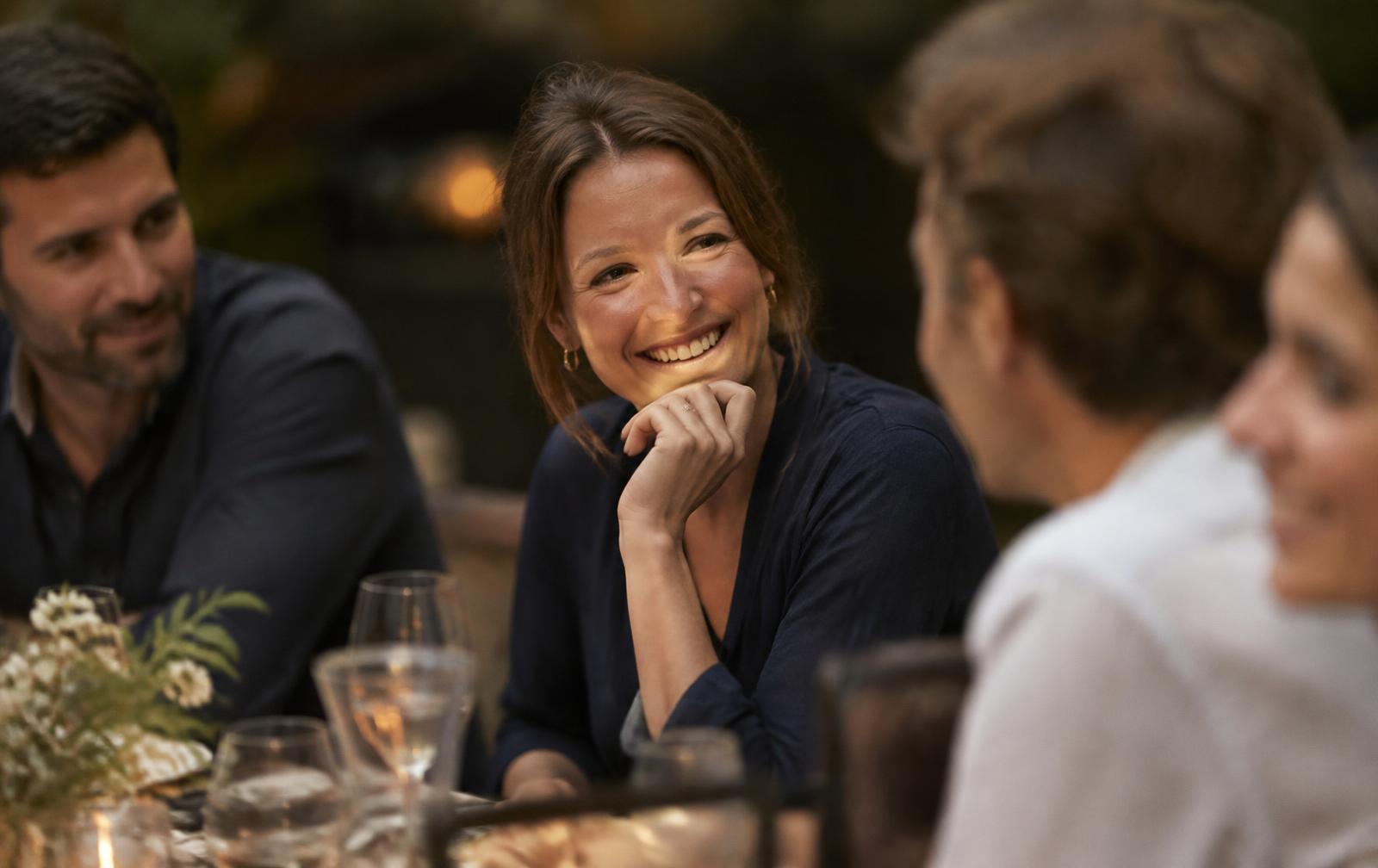
There is a particular friend in whose company you become, without trying, the funniest person in the room. There is a relative around whom you shrink a little, choosing your words as though they might be weighed. There is a colleague who makes you sharper, and an old acquaintance who somehow returns you to the age you were when you met. None of this is planned. It simply happens, the moment you walk in and they look up.
We tend to describe this as being 'different' with different people, and we often say it with a hint of apology, as though consistency were the more respectable condition. But it may be worth taking the observation seriously rather than excusing it. If who we are shifts depending on who is watching, then perhaps identity is less a fixed object than something that is partly made between people.
Not masks, exactly
The easy explanation is that we wear masks. In some company we perform; in other company we relax, and the relaxed version is the true one. There is something to this. Most people know the exhaustion of holding a shape that does not fit.
Yet the mask theory has a flaw. It assumes there is a finished self underneath, waiting to be revealed once the right person arrives. Experience suggests something less tidy. The playfulness that appears with one friend is not hidden the rest of the time; it is genuinely called into being by the way that friend listens, laughs, takes the bait. Without them, it has nowhere to go. The confidence you feel with a particular mentor is not a costume. It is a response to being expected to be capable.
Some parts of us exist only as a conversation. They need another person to answer back.
What other people draw out
Seen this way, the people in our lives are not merely an audience to a self we already possess. They are, in a modest but real sense, collaborators. Each relationship has its own climate, and certain qualities grow in some climates and not in others.
This can be a gift. A new friendship can introduce us to a gentleness we did not know we had. A partner who treats our ideas as worth hearing can, over years, make us someone who has ideas worth hearing. Being around people who are curious about us tends to make us more curious about ourselves.
It can also be a cost. There are relationships in which we become smaller, more defended, quicker to anger or slower to speak. We may not choose these versions, and we may not like them, but they too are drawn out by something in the space between. It is unsettling to realise that someone else can, simply by being who they are, bring forward a part of us we would rather not meet.
The question of the 'real' self
When people ask which version is real, the question usually carries a hope: that there is a single, authoritative self we could locate and then live from consistently. It is an understandable hope. But the evidence of an ordinary life points elsewhere. We are guarded and open, serious and silly, generous and petty, and which of these comes forward depends a great deal on circumstance.
That does not make us false. It makes us responsive. The more useful question may not be 'which of these is me?' but 'which of these do I want more room for?' — and, following from that, 'which relationships give it room?'
A different way to look at our company
This perspective changes how we might think about the people we spend time with. Instead of only asking whether someone is kind, or interesting, or good for us in the abstract, we might ask a quieter question: who do I become when I am with them? Do I leave their company feeling more like myself or less? More capable of honesty, or more practised at concealment?
There are no clean answers here. A relationship that brings out our worst on some days may bring out our best on others. Some people draw out a version of us that is uncomfortable precisely because it is growing. And we, of course, are doing the same to everyone we know — shaping, without meaning to, the selves they are able to be in our presence.
Perhaps that is the more sobering part of the observation. If others help to make us, then we help to make them. Somewhere, someone is quieter because of how we listen, or braver because of how we respond. It is worth wondering, now and then, which.
Continue reading

The Expectations We Inherit
Before we choose a partner, we have already absorbed a set of quiet instructions about what a relationship should look like. Few of us ever read them closely.
What We Mean When We Say, “I Feel Seen”
The phrase has become so common it risks losing its weight. But the experience it points to is real, and surprisingly varied. Being seen can mean very different things to different people.

What Does Emotional Availability Actually Look Like?
We hear the phrase constantly, usually as a criticism. But what does emotional availability look like on an ordinary Tuesday, in a real kitchen, between real people?