
Reflections
The Unfinished Questions We Carry About Love
Why some questions grow more interesting the longer we leave them open.
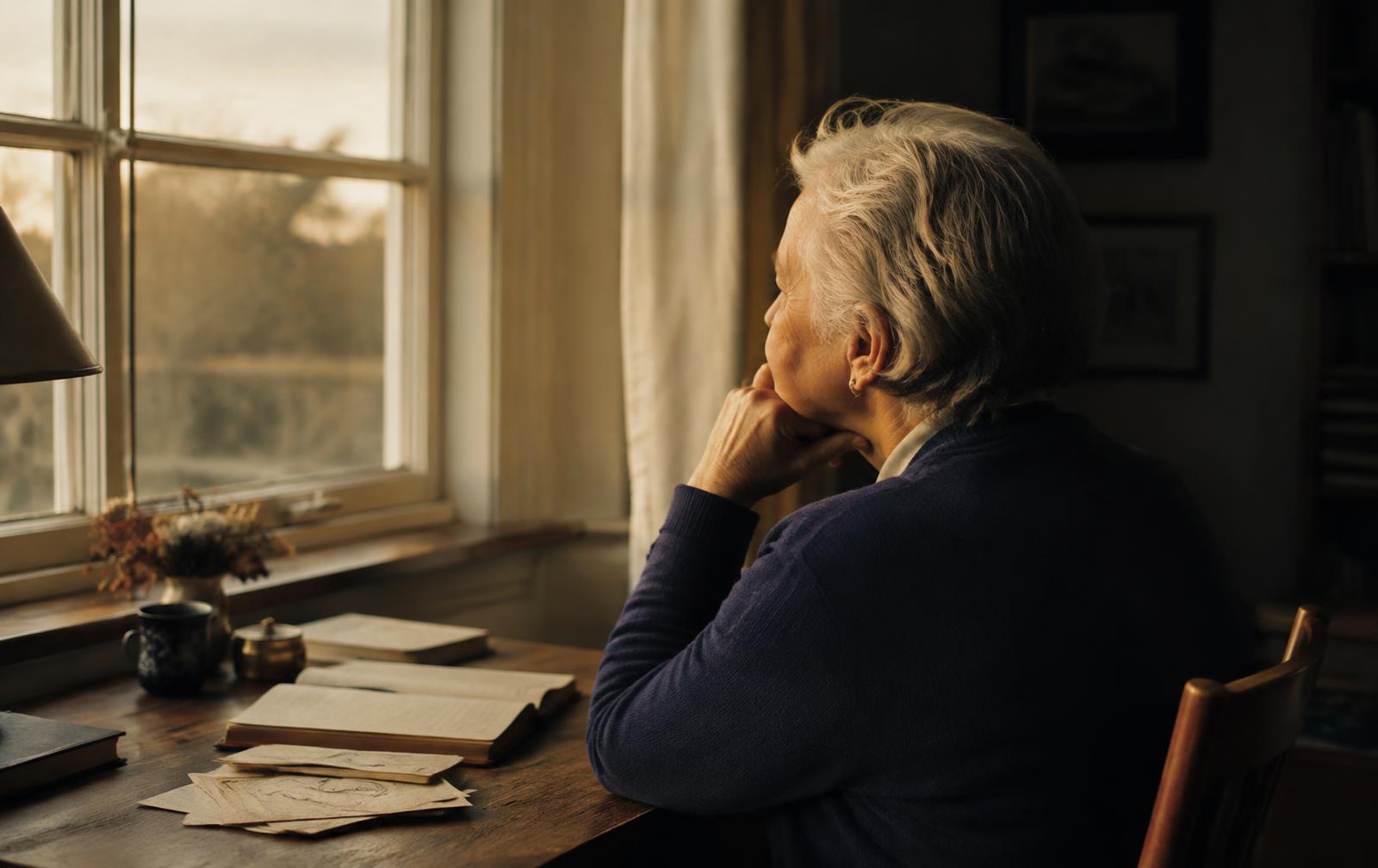
Most of us begin with answers. Young, we know what love is supposed to feel like, what a good relationship looks like, what we would never tolerate and what we would always forgive. These answers come from somewhere — family, stories, friends, a first heartbreak — and they arrive with confidence.
Then life happens. And one by one, many of those answers stop fitting. Not always because they were wrong, but because they were too small for what turned out to be true.
How certainty erodes
Sometimes the change is sudden: a relationship ends in a way we never expected, or we find ourselves doing something we were sure we never would. More often, it is slow. We watch the marriages around us and see that the ones we thought were perfect were not, and the ones we pitied were stranger and richer than we knew.
We discover that love can coexist with irritation, that passion and safety do not always arrive together, that someone can be right for us and still be difficult. We learn that we ourselves are more complicated than our early beliefs allowed for.
Experience does not always give us better answers. Sometimes it gives us better questions.
The pressure to resolve
There is a strong cultural pull towards resolution. We like conclusions: lessons learned, rules derived, wisdom distilled into something that can be passed on. Many conversations about love end with a neat principle — always do this, never do that.
Some of these principles are useful. But they can also close down thought too early. A question like 'What do we owe the people we love?' or 'Can love change without ending?' is not obviously improved by a tidy answer. The tidy answer may simply mean we have stopped looking.
Living with open questions
Leaving a question open is not the same as being lost. It can be a form of honesty — an acknowledgement that our understanding is still developing, that the people we love are still changing, and that what was true at one stage of life may not be true at another.
Open questions also leave room for others. When we hold our conclusions about love loosely, we become more curious about the different ways other people experience it. Their choices become less like errors to correct and more like perspectives to learn from.
What remains unfinished
Everyone carries their own unfinished questions. Whether it is possible to be fully known. Whether some loves are meant to be temporary. What it means to choose someone, and to keep choosing them. How much of ourselves we should give away, and how much we should keep. Whether we have loved well.
These questions may never close. That might be the point. They keep us attentive, unsettled in a way that is not entirely uncomfortable. They remind us that love is not a problem we solve once, but something we keep encountering — differently, at different ages, with different people.
This is, in a sense, why a place like this exists. Not to settle the questions, but to keep them company for a while — and perhaps to discover that others have been carrying them too.
Continue reading
The Questions That Remain
There are many places to find advice about love. This is meant to be a different kind of place — one that stays with the question a little longer.

The Relationships That Change Us Without Staying
A teacher, a former partner, a friend from one strange year. Some people leave our daily lives and remain in our decisions, our phrases, the way we see things.
The People We Become in the Presence of Others
Most of us have noticed it: a version of ourselves that only appears around certain people. It is tempting to call one of those versions the real one. It may be more honest to say they all are.